
Logistics & Warehousing

Logistics only works if...with overview

In logistics and warehousing operations, most problems arise not during transport itself, but in coordination: status updates are missing, information arrives too late or doesn't reach the right person. This leads to queries, delays, and avoidable errors.
Simplico 's solutions connect warehouse, dispatch, drivers, and office to create a seamless flow of information. Processes become clearer, responses faster, and resources are conserved through fewer empty runs and better planning—economically and also in terms of more sustainable logistics.
Logistics and warehousing problems that are worth solving.
Unclear shipment status
The actual location of goods often needs to be actively determined. Logistics, warehousing, and customer service have different levels of information and rely on various sources. This leads to incorrect information being given, customers having to be called back, and employees spending time searching instead of working. In the worst-case scenario, goods are picked twice or a shipment is reported as lost even though it is already en route—resulting in wasted time and unnecessary costs.
Many phone calls instead of processes
Drivers, warehouse staff, and the office are constantly coordinating by phone: arrival times, changes, or delays. The same information is passed around multiple times and interpreted differently. This not only ties up working time but also interrupts ongoing tasks. While phone calls are being made, other orders are left undone, priorities shift, and decisions are delayed, slowing down the entire process.
Delayed fault reports
Problems are often only noticed when a customer inquires or a delivery hasn't arrived. Until then, it's assumed internally that everything is running smoothly. The company reacts instead of proactively managing: Alternative solutions have to be organized at short notice, additional deliveries are made, and employees work under time pressure. This leads to higher costs and dissatisfied customers.
Separate systems
Route planning, warehouse management, scanners, email, and customer portals all work together. Information is copied, transferred, or re-entered. This process can lead to errors because data is processed multiple times: incorrect addresses, outdated quantities, or missing status updates. A minor input error can result in a shipment being incorrectly dispatched or a driver making an unnecessary trip.
Uncoordinated deliveries
Suppliers, drivers, and warehouses often don't meet at the same time. Loading docks are blocked, or employees are waiting for goods that are still in transit. Downtime ensues: vehicles sit idle unnecessarily, personnel are tied up, and subsequent orders are delayed. Capacity utilization decreases while time pressure increases.
High documentation effort
Delivery notes, receipts, or damage reports are photographed, filed away, or added later. Documents are scattered or missing precisely when needed. When complaints or claims need to be documented, employees have to search extensively or are unable to clearly prove damages. This leads to disputes, liability issues, and financial losses.
Our solutions for logistics & warehousing

Automatically synchronize status messages
Scanning processes, GPS data or status updates are automatically synchronized between warehouse, dispatch and customer service.
All parties involved see the same current status, without telephone inquiries or manual forwarding of information.

Detect problems early
Missing scans, time discrepancies, or incomplete jobs are automatically detected and reported.
Instead of only reacting to customer complaints, the company can intervene proactively and minimize delays.

Structuring driver communication
Messages, photos or notes from drivers are automatically assigned to the correct order and forwarded internally.
Information is not lost and does not need to be manually searched or passed on.

Secure handovers digitally
Shift changes or driver changes are systematically documented. Open tasks and special circumstances are automatically passed on to the next responsible person.
This ensures a stable flow of information, even when people change.
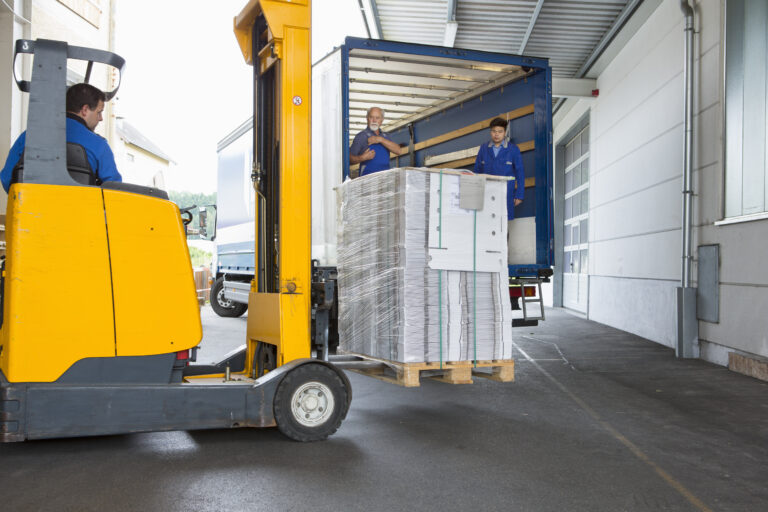
Supplier and ramp coordination
Deliveries are coordinated in terms of timing and changes are communicated automatically.
Waiting times at ramps, empty runs and unnecessary downtime are reduced — processes become more predictable.

Automatically assign documents
Delivery notes, receipt confirmations or damage photos are recognized and directly assigned to the correct order.
Evidence is available at any time and no longer needs to be searched for manually.

Automatically inform customers
Status updates, delays, or delivery confirmations are automatically forwarded to customers.
Customer service is relieved of some of its workload, while transparency and professionalism increase.

Monitor order processing
From goods receipt to delivery, every step is automatically tracked.
Deviations or delays become apparent before they affect the entire process.