

Internal AI assistants & knowledge bots
Internal AI assistants directly support employees in their daily work by answering questions, providing information, and handling recurring inquiries.
Instead of searching for responsibilities, instructions or documents, employees immediately receive relevant answers regarding processes, services or products.
This makes onboarding, internal communication and the handling of customer requests significantly faster and less dependent on individual people.
Email & Inquiry Processing
Incoming emails and contact requests are automatically analyzed, sorted, and forwarded to the appropriate department. Standard replies can be prepared, and important requests are prioritized, ensuring nothing is overlooked.
Attachments and information are directly assigned to customers, projects, or processes, keeping mailboxes organized and reducing processing times.
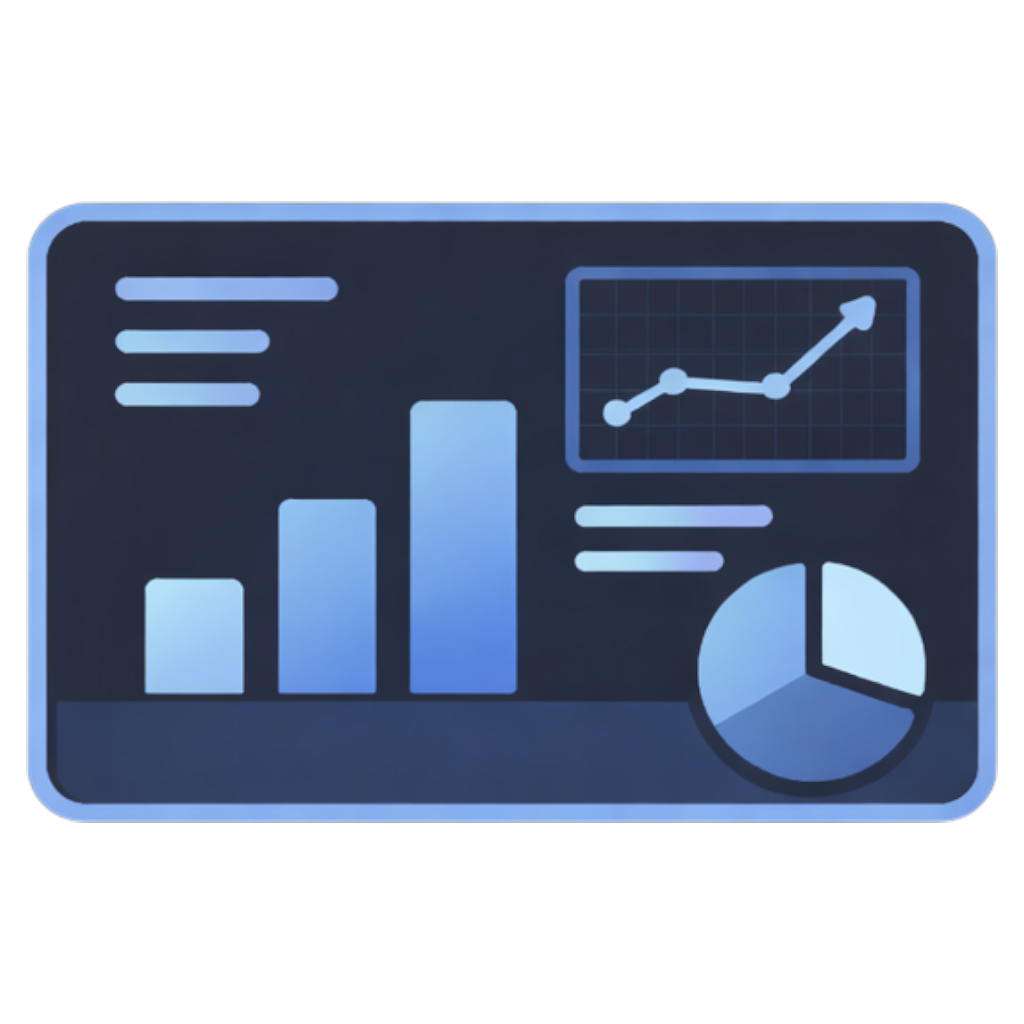
Reporting & KPI Automation
Key business figures are automatically compiled from various sources and continuously updated.
Reports, analyses, and overviews are available at any time without the need for manual data collection or processing. Deviations or trends can be identified early, enabling faster and more informed decisions.
Supplier & procurement processes
Orders, reorders, and supplier communication are automatically prepared and monitored. Missing materials can be reordered independently, while delivery status and confirmations are automatically recorded.
This allows companies to maintain an overview of inventory and open orders at all times, without manual tracking.
Quotation and order automation
Inquiries are automatically recognized, structured, and prepared as offers or orders. Customers receive faster feedback, while internal transfers to planning, warehousing, or scheduling occur without manual input.
Follow-up actions for open offers or order confirmations also continue automatically, resulting in less work in day-to-day business.
Robotic Process Automation (RPA)
Software robots take over repetitive clicking and input tasks in existing applications, just like an employee at a computer.
Data is automatically transferred between systems, information is imported from portals, and regular checks are performed. This reduces errors, speeds up processes, and relieves employees of monotonous tasks.
Document and invoice processing
Documents such as invoices, orders or receipts are automatically read and assigned to the correct processes.
The data is transferred directly into existing systems, eliminating manual input and typical typos.
Accounting, project allocation and archiving continue in the background, saving time in the office every day.
Planning & Forecasting
Based on existing data, capacities, utilization and future demand are automatically analyzed.
The system identifies bottlenecks early and provides support for scheduling and resource planning.
This allows decisions to be better prepared and the business to be managed in a more predictable way.